Fermented vs. pickled: Learn how vinegar pickles differ from raw sauerkraut and lacto fermentation, what live cultures have to do with gut health, and how Ourkraut makes The Pink.
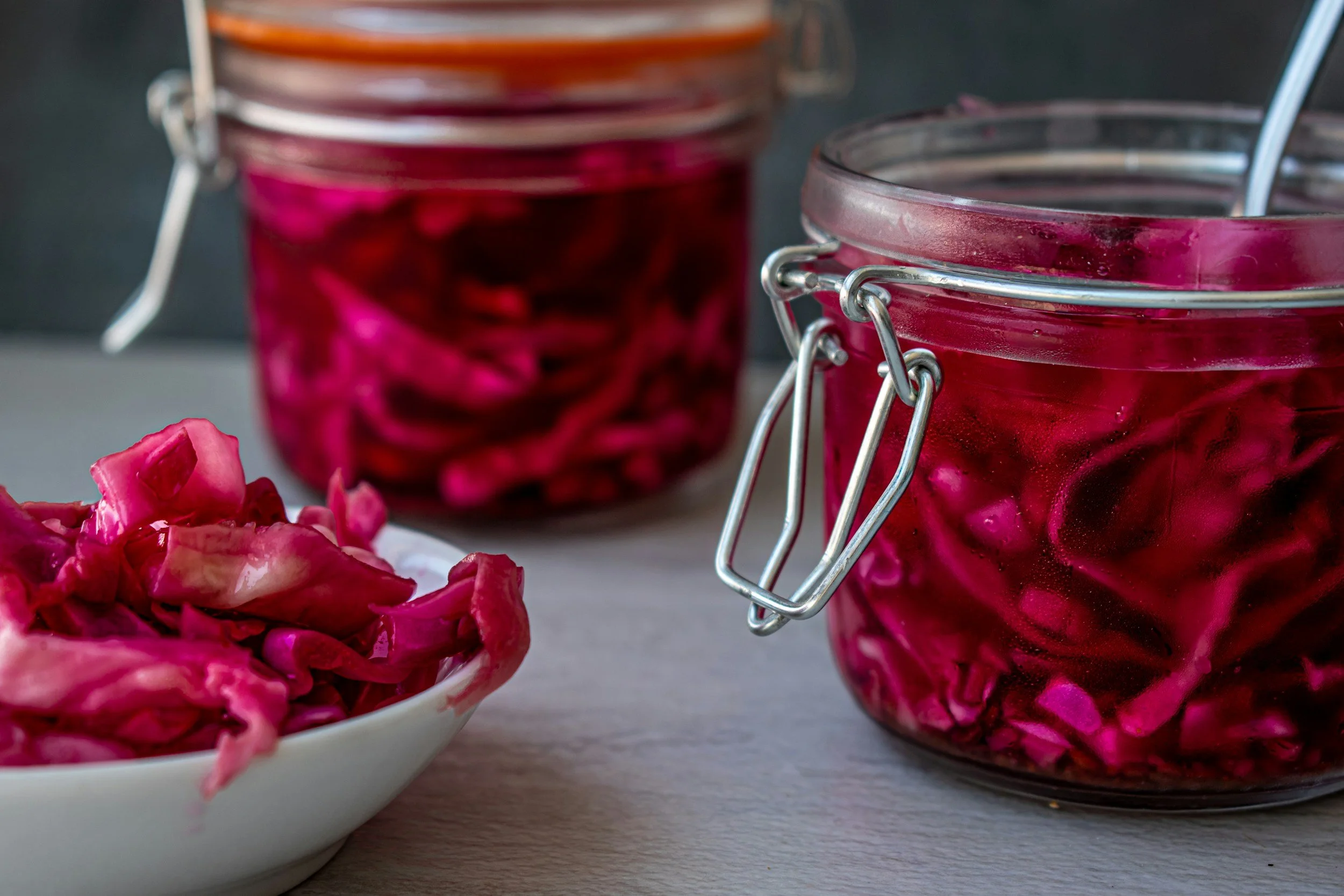
Two jars can deliver the same tangy crunch and get there in completely different ways. In one, vinegar brings the sour. In the other, bacteria make it. That little difference explains why one jar is a great sandwich topping and why the other might also contain live cultures.
Who made the tang?
Vinegar pickling starts with acid. Pour a vinegar brine over cucumbers or red onions and you get that sharp, bright bite. Vinegar does the work, so the vegetables themselves don’t need to ferment. They’re a perfectly good snack, and they can wake up a taco in about three seconds. Vinegar pickling by itself doesn’t produce the live cultures you’d find in a raw ferment.
Lacto-fermentation makes acid along the way. In sauerkraut, lactic acid bacteria turn some of the cabbage’s natural sugars into lactic acid. That’s where the tang comes from. It’s how we make The Pink, Ourkraut’s raw, unpasteurized purple cabbage sauerkraut. The cabbage gets its sour bite from fermentation, with no vinegar added.
And yes, a pickle can be fermented. Some cucumber pickles get their tang from bacteria working in a salt brine. Others get it from vinegar. The word pickle alone leaves that part of the story open.
What does that have to do with your gut?
Your gut microbiome is the community of microorganisms living in your digestive tract. Researchers are interested in fermented foods because fermentation changes the food itself, and some fermented foods also bring live microbes along for the ride. Raw sauerkraut can contain live cultures. Pasteurization reduces or eliminates those cultures, even though the kraut still has its fermented flavor.
In a small randomized study published in Cell, healthy adults who ate more fermented foods showed increased gut microbial diversity and decreases in several markers of inflammation. The participants ate a mix of fermented foods, so the results speak to the overall diet. What a single food like sauerkraut contributes on its own is still an open question.
One useful label distinction is live cultures versus probiotics. In research, probiotic refers to live microorganisms shown to provide a health benefit at an adequate dose. The presence of live cultures in a jar tells you something about the food. Establishing a specific health benefit takes additional evidence.
What to look for in the fridge aisle
If you’re shopping for live cultures, look for naturally fermented, raw or unpasteurized, and contains live cultures. Refrigeration is a clue. The process and the label tell you more. And if what you want is a sharp, vinegary crunch, grab the pickles. There’s room for both jars in the fridge.
As for The Pink? Try a cold forkful on hot pierogi, tuck it into a grilled cheese just before serving, or pile it onto a cream cheese bagel. Our Polish roots and our Venice breakfast habits agree on that last one.