From Polish pierogi to Salvadoran pupusas, follow five cabbage ferments and the food traditions that keep them on the table.
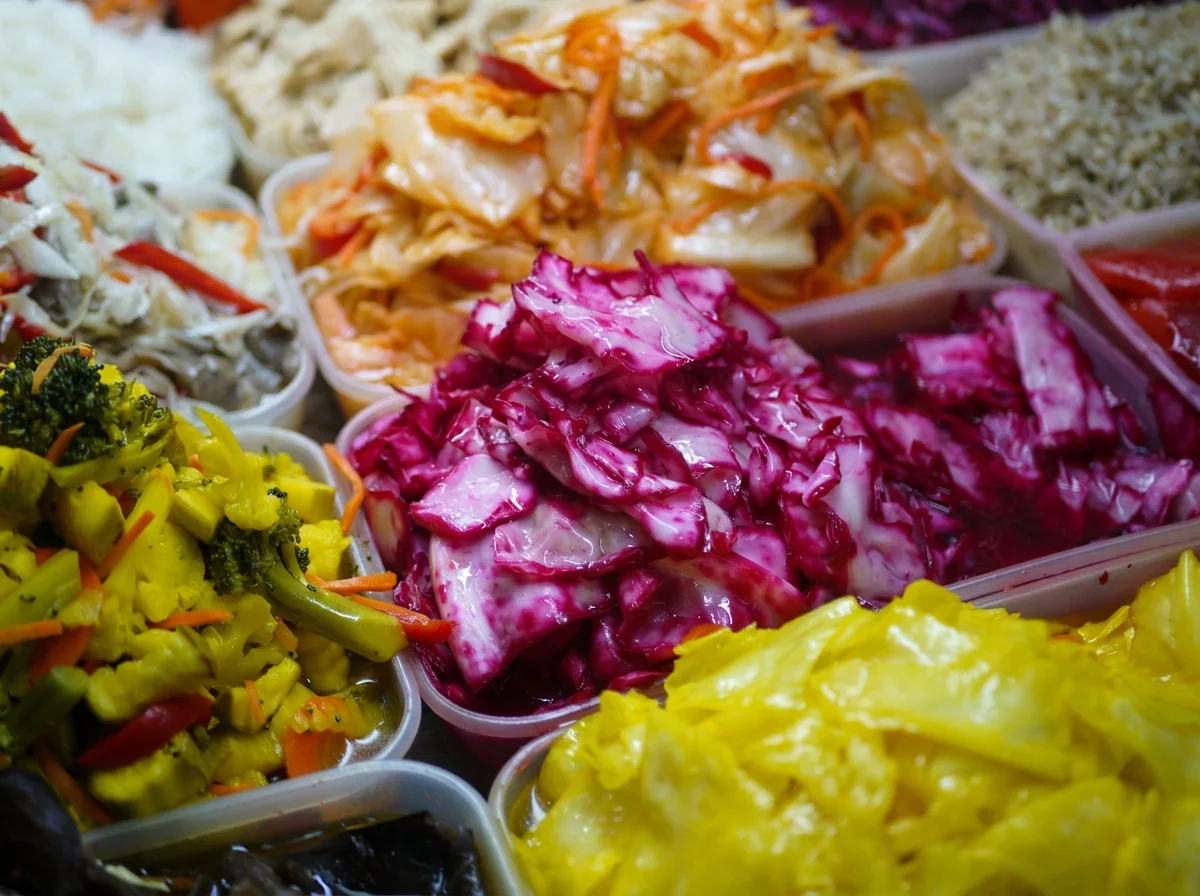
A forkful of sauerkraut takes me back to the Polish kitchen I grew up in. Put that same forkful on a cream cheese bagel in Venice, California, and it feels right at home there, too. That’s one of my favorite things about fermented food. It carries a sense of place and still finds its way onto new plates.
So let’s follow the sour. We’ll start with sauerkraut in Poland, then see what cooks in Korea, El Salvador, the eastern Himalayas, and northeastern China do with cabbage and its leafy cousins.
1. Sauerkraut · Poland
In Poland, sauerkraut is kapusta kiszona. Shredded cabbage and salt are the starting point. Lactic acid bacteria turn some of the cabbage’s sugars into lactic acid, which gives kraut its tang. At Christmas Eve dinner, sauerkraut turns up braised with dried mushrooms or tucked inside pierogi. The same cabbage that crunches straight from the jar can become soft, savory, and earthy once it’s cooked.
Fermenting was a family tradition for me growing up in Poland, and it’s where The Pink gets its roots. At Ourkraut, we use purple cabbage and keep the kraut raw and unpasteurized. I still love a cold forkful alongside hot pierogi. The bagel came later.
Poland is where my sauerkraut story starts, but the tradition stretches well beyond it. In Germany, sauerkraut is a classic alongside bratwurst. In Ukraine, sour cabbage finds its way into kapusniak, a hearty cabbage soup. Same kraut, different European tables.
2. Kimchi · Korea
Kimchi comes in many forms. In the napa cabbage version, the leaves can be seasoned with red pepper, garlic, ginger, and fermented seafood before they ferment. Take a bite alongside rice and you get crunch, heat, and sourness all at once.
The story I love here is kimjang, the late-autumn tradition of making and sharing kimchi for winter. Families and neighbors work together, making enough to share. UNESCO recognizes the practice as intangible cultural heritage. It’s a reminder that a recipe can be something you learn by standing next to someone and working through a pile of cabbage together.
3. Curtido · El Salvador
Order pupusas and look for the cabbage slaw alongside them. That’s curtido. Shredded cabbage, carrots, onion, and oregano give you a crisp, aromatic bite between mouthfuls of warm masa and filling. The oregano is what makes me want to go back for another bite.
Curtido can be made as a quick vinegar slaw or left to ferment. The fermented version is especially close to kraut. Start with shredded cabbage, let it sour, and add carrots for sweetness and oregano for a flavor all its own.
4. Gundruk · The eastern Himalayas
In Sikkim and the Darjeeling hills, as well as in Nepal and Bhutan, gundruk tells a different preservation story. Cooks ferment leafy greens such as mustard or radish leaves, and cabbage leaves can be used too. The leaves are typically sun-dried after fermentation, so they can be stored in the pantry and brought out later for soup.
Imagine opening the cupboard on a cold day, pulling out a handful of dried greens, and having that sour, leafy flavor waiting for you. That’s the stop on this trip that changed how I think about a ferment. Sometimes the best way to eat it starts with a pot of hot broth.
5. Suan cai · Northeastern China
In northeastern China, or Dongbei, suan cai is made with napa cabbage. Whole heads can be fermented and sliced later. The sour cabbage can then go into a winter stew with pork and noodles or be chopped into a pork dumpling filling. In both dishes, the cabbage’s acidity cuts through the richness of the pork.
I’d order the dumplings first. Sauerkraut and mushroom pierogi were my starting point, so a dumpling stuffed with sour cabbage feels like a familiar idea told in a different accent.
Back at home, I’m taking one cue from the pupusa plate. The next time I make something warm, rich, and a little too soft all the way through, I’m putting a cold, crunchy forkful of Ourkraut on the side. And if it’s a cream cheese bagel, it’s going right on top.